
A Sikh wedding is really two events wearing one date: a religious morning that belongs to the gurdwara, and a celebration night that belongs to the families. The most common music mistake couples make is planning them as one thing. They are not — they have different rules, different energy curves, and a DJ has a completely different job in each. After twenty years of Sikh weddings in and around West London, here is how the day actually works.
The gurdwara morning is not a DJ's stage
Let's start with what a good DJ will tell you upfront: inside the darbar hall, the Anand Karaj belongs to the ragis. The kirtan, the laavan — that is the ceremony, and no DJ has any role in it. Any DJ who talks about "doing the gurdwara" without making that distinction hasn't done many. The DJ's morning work happens outside: the baraat's arrival, the energy in the car park before the milni, and sometimes background music at the family gathering beforehand. Respect is part of the job description — heads covered, shoes off, no alcohol anywhere near the premises, and volume that never bleeds into the hall.
The baraat runs on gurdwara time
Sikh baraats are early. Where a reception peaks at eleven at night, a baraat often has to peak at nine in the morning — and be finished by the time the programme inside starts. That changes the music's job entirely: you are lifting a crowd that was up at six, outdoors, sometimes in the cold, with neighbours on both sides. It is dhol-led, and the DJ's role is the same as at any baraat — reinforce the drum, fill its rests, and land the end cleanly so the families walk into the milni on time. Most gurdwaras also have their own rules about amplified music outside — some allow a full rig in the car park, some want dhol only, and the committee's word is final. Ask your gurdwara before you brief your DJ, and then brief your DJ with the answer.
The milni and the gap
The milni — the formal meeting of the two families — sits between the baraat's noise and the ceremony's calm, and it needs the music already silent. Then, after the Anand Karaj and langar, most Sikh weddings hit the gap: an afternoon lull while everyone changes, travels and regroups for the evening. Nothing about the gap needs a DJ — but everything after it does, and the handover brief (timings, entrances, first dance, speeches) is usually confirmed in exactly this window. A DJ doing the whole day plans for it; a DJ doing only the night should already have it in writing.
The reception is a different country
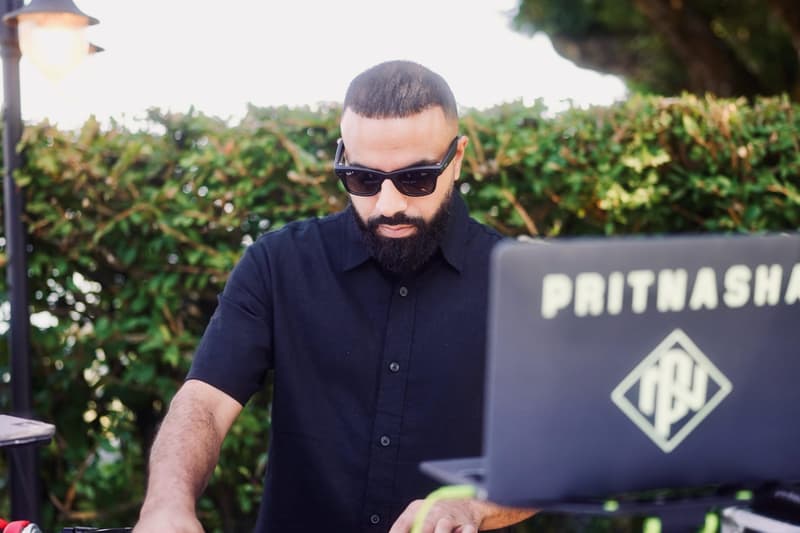
Evening flips every rule. Now it is entrances and a first dance, speeches, and then the floor — and a Sikh reception floor is one of the best in the business when it is read properly. The spine of the night is Bhangra: the UK classics the parents' generation grew up on, and the current Punjabi wave for the cousins. Around that spine sit Bollywood for the wider family, and R&B, Afrobeats and pop for the friends who don't know the Punjabi catalogue — sequenced so the floor never splits into camps. The boliyan and the giddha circles will start on their own; the skill is spotting them and giving them room instead of talking over them.
One practical note: every gurdwara is its own authority. Rules on dhol, amplification, timings and parking differ from one to the next — and they are set by the committee, not by precedent from someone else's wedding. Confirm your gurdwara's rules first, then plan the baraat's music inside them. It is the single most common thing that reshapes a Sikh wedding morning late in the day.
The questions to ask any DJ quoting a Sikh wedding
- What is your role at the gurdwara — and what do you understand it not to be?
- How do you run an early-morning baraat differently from an evening floor?
- How do you work with our dhol player, outside and at the reception?
- How do you hold Bhangra, Bollywood and the friends' genres on one floor without splitting it?
- Is the person planning the day the person behind the decks at both ends of it?
The last question decides the others. A Sikh wedding day is long, specific and full of seams — and the seams only stay invisible when the DJ who planned them is the DJ working them. Prit Nasha is a direct booking — one artist, gurdwara morning to reception night.
Related reading: Sikh Wedding DJ London · Bhangra DJ London · Asian Wedding DJ London · Baraat Songs & Music · Mehndi Songs & Music