
The mehndi is the most intimate night of the wedding week — and musically, the most misunderstood. It is not a small reception. It starts as a living room and ends as a dancefloor, and the whole job is managing the turn between the two. Book a DJ who only knows how to do the second half and the first half dies; book one who only respects the first half and nobody dances. After twenty years of mehndi nights, here is how Prit Nasha builds the arc.
What the mehndi night is asking of the music
For the first hour or two, the room is seated. Henna is being applied, food is circulating, three generations are talking across tables, and the bride is the centre of a slow, unhurried ritual. Music at this stage is atmosphere, not instruction — warm, familiar, and quiet enough that your grandmother can hold a conversation. The mistake is treating this as dead time before the party. It is the party, in its first form, and the songs playing under it are doing quiet work: settling the room, signalling the tradition, and letting the older generation hear music that belongs to them.
The dholki hour
At the heart of most mehndi nights is the dholki — the small two-headed drum, the circle of aunties around it, and the folk songs and boliyan that have been sung at these gatherings for generations. When the singing starts, the DJ's job inverts: support, don't compete. That means the playback comes down or out entirely, a microphone is ready if the circle wants one, and the DJ knows the canon well enough to pick the thread up when the singing pauses — a classic like Latthe Di Chadar or the call-and-answer of Chitta Kukkar lands very differently when it follows the live circle instead of interrupting it.
Not every family has a dholki circle, and plenty of mehndis now book a professional dhol player or singer instead. Either way, the same rule holds: the live tradition leads, the DJ frames it. Ask any DJ how they work around live singing. If the answer is a blank look, keep looking.
The turn — when the room stands up
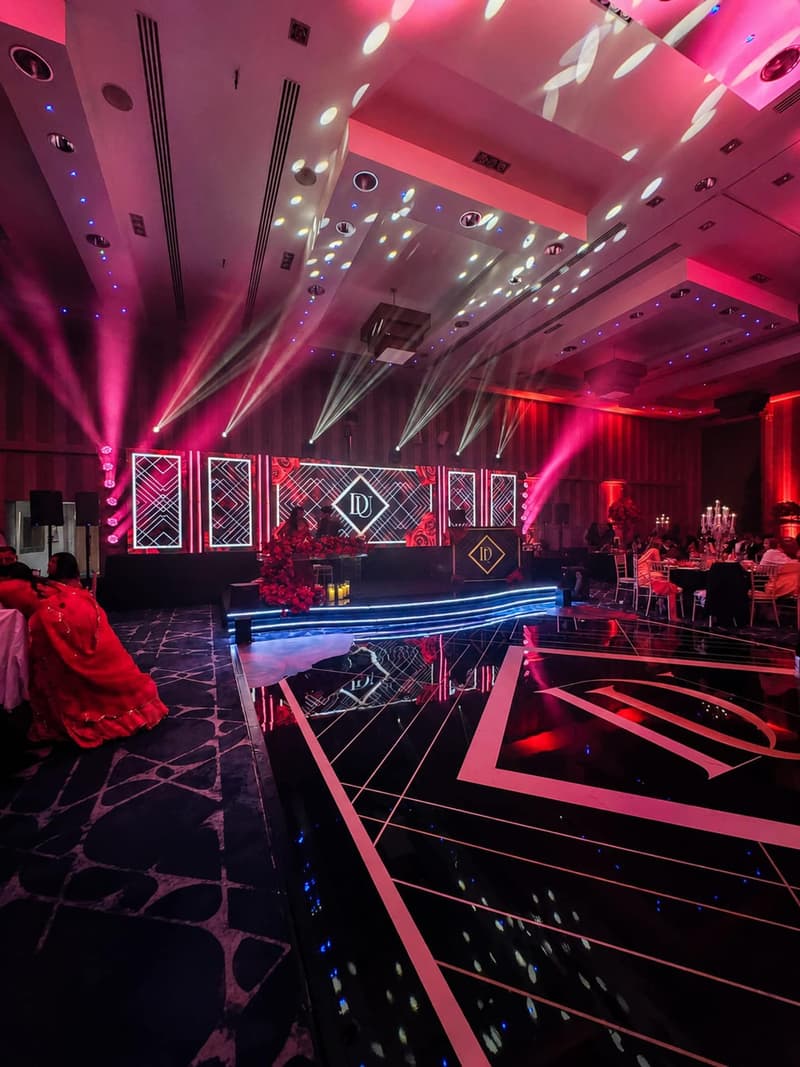
Every good mehndi has a moment where the night pivots: the henna is done, the plates are cleared, and the room is ready to move. You cannot force that moment early and you cannot miss it when it comes. Reading it is the craft. From there the music climbs in lanes rather than a fixed playlist:
- The mehndi classics — the filmi songs written for exactly this night, Mehndi Laga Ke Rakhna and its generation, which pull the aunties from the dholki circle straight onto the floor.
- Boliyan gone electric — recorded Bhangra built on the same folk bones as the live circle, so the energy rises without changing language.
- Current Punjabi and Bollywood heat — for the cousins, once the floor is established and can take tempo.
- The crossover lane — a run of Afrobeats, R&B or pop for a mixed guest list, so nobody spends the night on the sidelines.
A note on the henna itself: the bride's mehndi takes hours, and while her hands are being worked on she cannot dance — and the photographer is usually working around the same table. Coordinate the music's peak with the henna artist's timing, not the clock. A DJ who checks in with the artist before pushing the floor is protecting your photographs and your bride's evening at the same time.
The things that ambush a mehndi
Mehndi nights run into practical walls more often than any other wedding event, because so many happen at home or in smaller halls:
- Neighbours and noise limits. A marquee in the garden or a community hall midweek usually means a hard finish time and a volume ceiling. The set has to be built for it — peaking at nine, not eleven.
- Space. A home mehndi leaves the DJ a corner, not a stage. The rig has to scale down without sounding small, and the dancefloor has to be planned into the seating, not hoped for.
- Power. Domestic circuits and full sound systems are an uneasy pair. This is checked before the day, not discovered during it.
- The running order. Mehndi nights drift — food runs long, family arrives late, the henna overruns. The music has to stretch and compress without showing the seams.
The questions to ask any mehndi DJ
- How do you work with a live dholki circle or dhol player — before and during?
- How do you decide when the room is ready to turn from seated to dancing?
- What does your setup look like for a home or marquee mehndi — space, power, volume?
- How do you handle a hard finish time or a noise limit without killing the night?
- Is the person planning this the person who'll be there on the night?
The last question matters most. A mehndi is read, not programmed — and the reading only works if the DJ in the room is the one who planned it with you. Prit Nasha is a direct booking — the person behind the decks at your mehndi is the person you spoke to.
Related reading: Mehndi DJ London · Sangeet DJ London · Asian Wedding DJ London · The Sangeet Playlist Guide · Baraat Songs & Music