
The first dance is the one moment of the wedding that is only about the two of you — and for a fusion couple it carries an extra question nobody warns you about: whose music is it in? Pick entirely from one side and half the room watches politely. After twenty years of fusion and multicultural weddings, here are the three answers that actually work — and the pairings couples keep coming back to.
Route one: the crossover song
Some songs simply belong to everyone. A global ballad — the kind both your grandmothers have heard — sidesteps the whose-side question entirely. The trade-off is that it can feel safe rather than specific. If you go this route, make it yours in the details: the version, the arrangement, the moment the families are invited to join. A well-known song with a personal edit lands better than an obscure one chosen to be different.
Route two: the blend
This is the fusion couple's signature move: start in one world, finish in the other. A Western ballad for the first verse, then the seam — and the song opens into a Bollywood romance or a Punjabi classic as the families realise what's happening. Done properly it is the loudest cheer of the night. The craft is in the seam: the two songs need compatible keys and tempos, the switch needs to land on a phrase boundary, and the blend should be cut and rehearsed before the day — not improvised at 9pm. This is DJ work, not a playlist skill; ask whoever you book to play you the actual edit in advance.
Route three: two dances
Nothing says you only get one. Plenty of fusion weddings run a formal first dance in one tradition, then a second, looser entrance number in the other — a Western slow dance, then a choreographed Bollywood group piece with the bridal party, or the reverse. It gives each family a moment that is fully theirs, and it removes the pressure of making one song do everything.
Pairings that work
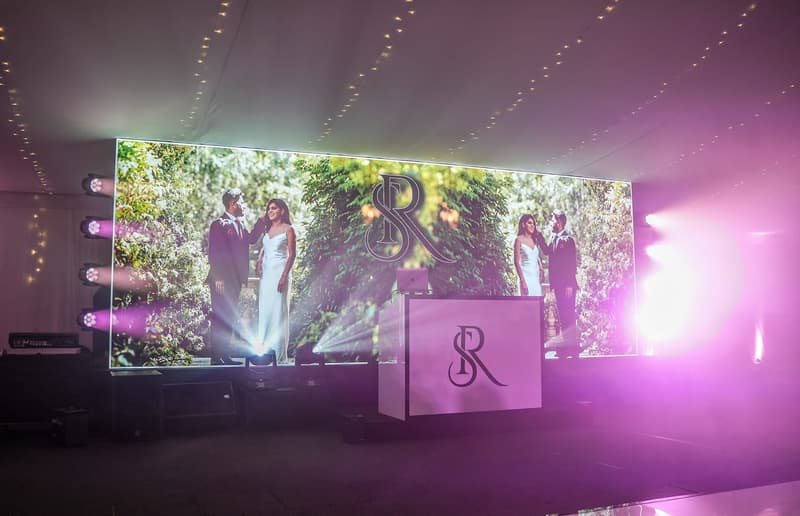
For the blend route, these combinations sit well together musically and emotionally — a starting point, not a rulebook:
- Ed Sheeran, "Perfect" × "Pehla Nasha" — the modern standard into the most romantic film song of its era; the nostalgia hits both generations at once.
- John Legend, "All of Me" × "Tum Hi Ho" — two piano-led devotionals; the seam is almost invisible.
- Elvis, "Can't Help Falling in Love" × "Raabta" — timeless into timeless; works beautifully with strings.
- Ed Sheeran, "Thinking Out Loud" × "Tere Sang Yaara" — same warmth, same slow-dance tempo either side of the switch.
- Any of the above reversed — starting desi and opening into the Western song plays just as well when one family is hosting away from home.
A note on the edit: a blend lives or dies on preparation. Confirm the exact versions, the switch point, and the total length (three to four minutes is plenty — you'll be glad of it mid-dance), and have the final edit signed off with your DJ before the week of the wedding. If you're being choreographed, your instructor needs that edit early, not a description of it.
The checklist
- Decide the route first — crossover, blend, or two dances — before arguing about songs.
- Shortlist two songs per side, then test them against each other for key and tempo.
- Get the actual edit made and approved early — and send it to your choreographer.
- Decide how it ends: families invited on, a group entrance, or straight into the party set.
- Tell your videographer the switch point — it is the shot of the night.
The first dance sets up everything that follows it. A DJ who builds the edit with you is also the DJ who knows exactly what to play the second it ends — Prit Nasha is a direct booking, and the person who cuts your blend is the person behind the decks when it plays.
Related reading: Fusion Wedding DJ London · Asian Wedding DJ London · Destination Wedding DJ · The Sangeet Playlist Guide · Reading the Room